
Sweet story, stunning visuals, and a helluva campaign for IMAX.
Project Hail Mary is a fantasy league draw for popcorn movie. Phil Lord and Christopher Miller, directors of The Lego Movie (2014) and producers of the Spider-Verse (2018) movies. Ryan Gosling in his Barbie (2023) comedy era starring (and producing) together with the amazing Sandra Hüller (Anatomy of a Fall and The Zone of Interest, 2023), and co-starring a cute puppet. Drew Goddard once again adapting a novel by The Martian (2015) author Andy Weir. The director of photography on Dune parts One (2021) and Two (2024), Greig Fraser, lensing this film in IMAX. The result: well, here’s the view from the IMAX projectionist’s booth:
It’s an at times odd mixture of comedy, hard sci-fi, and fantasy. It presents grim existential crises, both universal and personal, while also asking us to suspend our disbelief and indulge its sentimentality. It’s probably best described as, if not pitched at, YA sci-fi fantasy buddy-space-cop bromance – with stunning visuals.
Cinematography
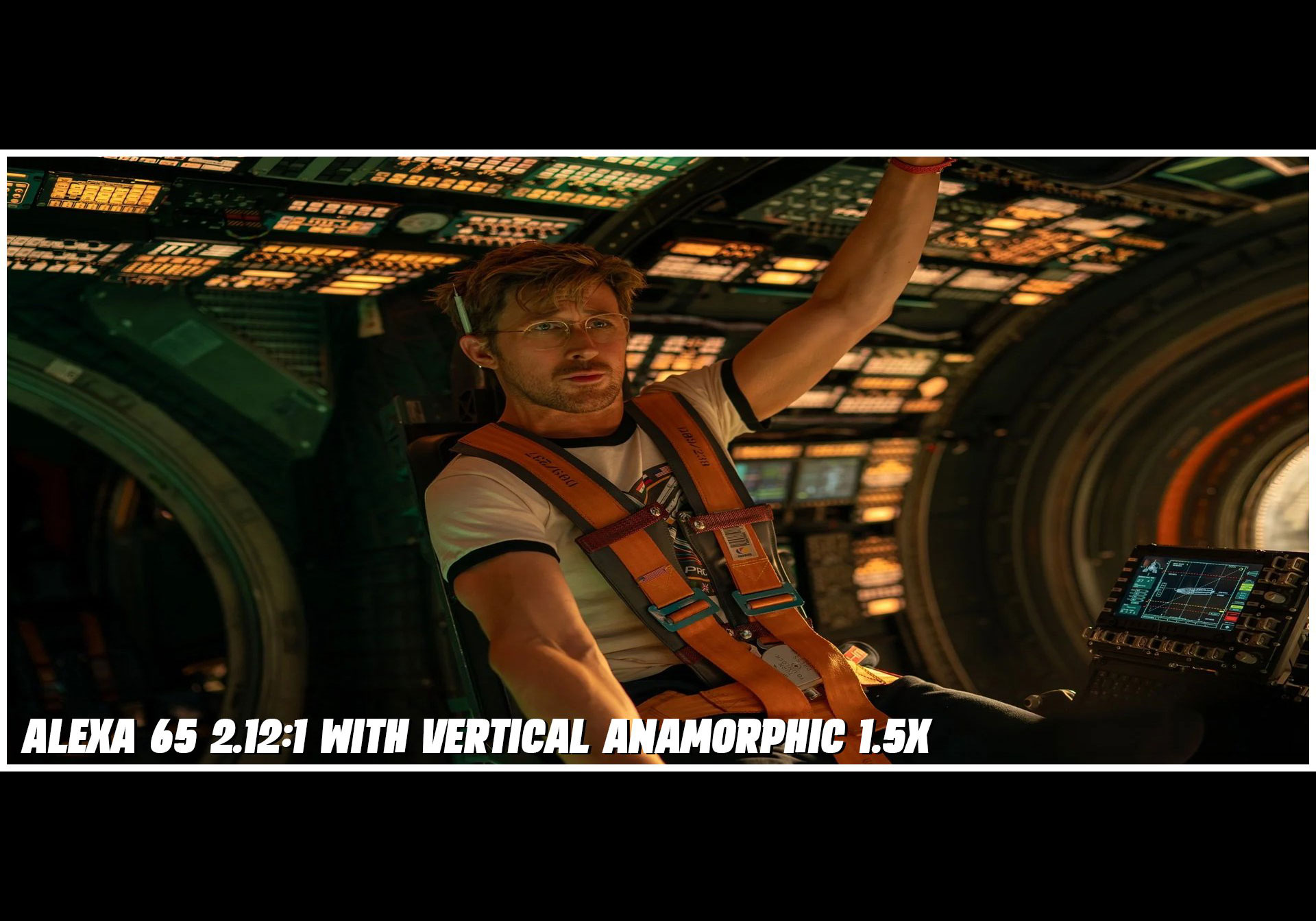
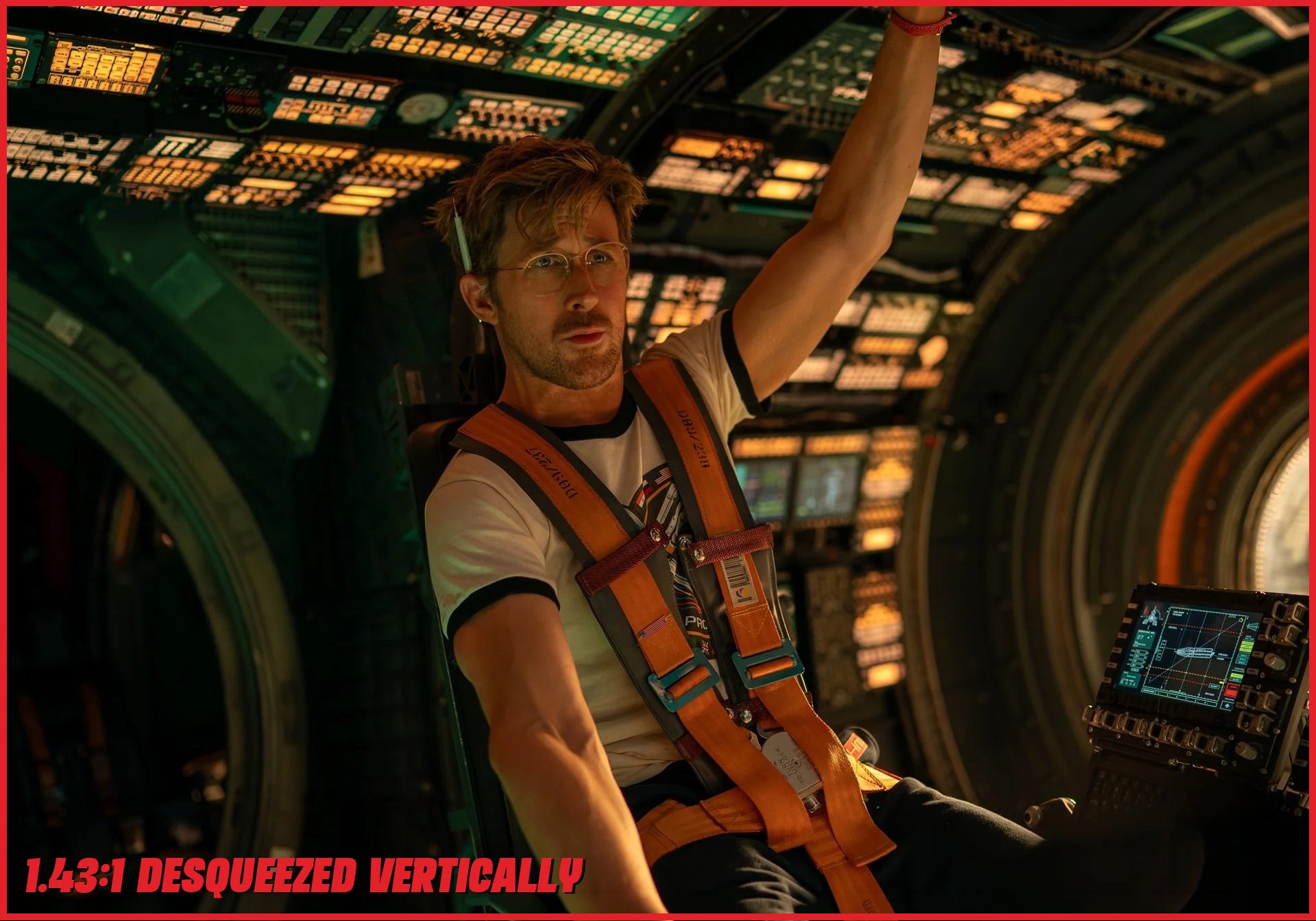
Adam Hlaváč offers an (unofficial) explainer of how an IMAX-shaped image was captured on a standard digital film camera. Instead of cropping in to the ARRI Alexa 65’s 2.12:1 image…
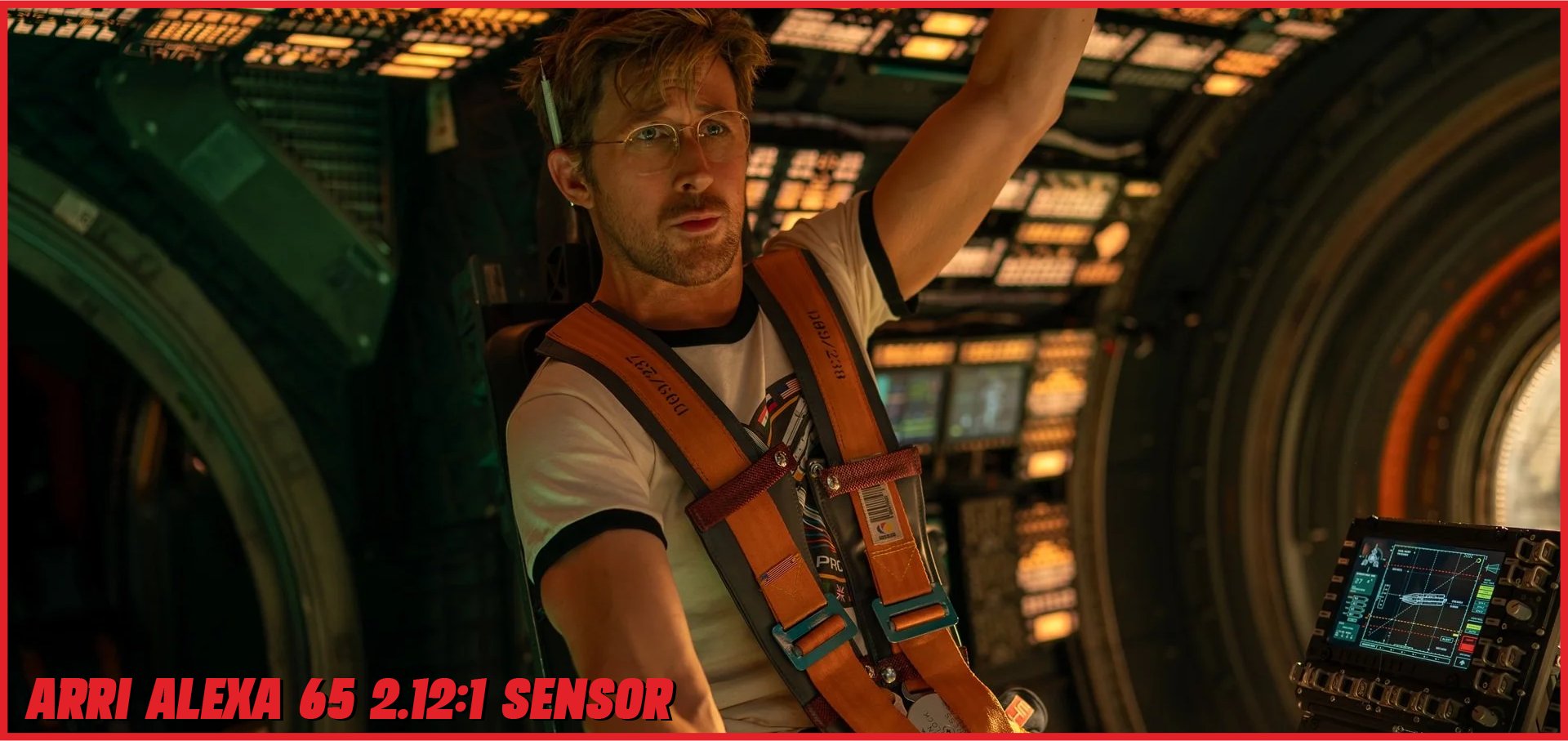
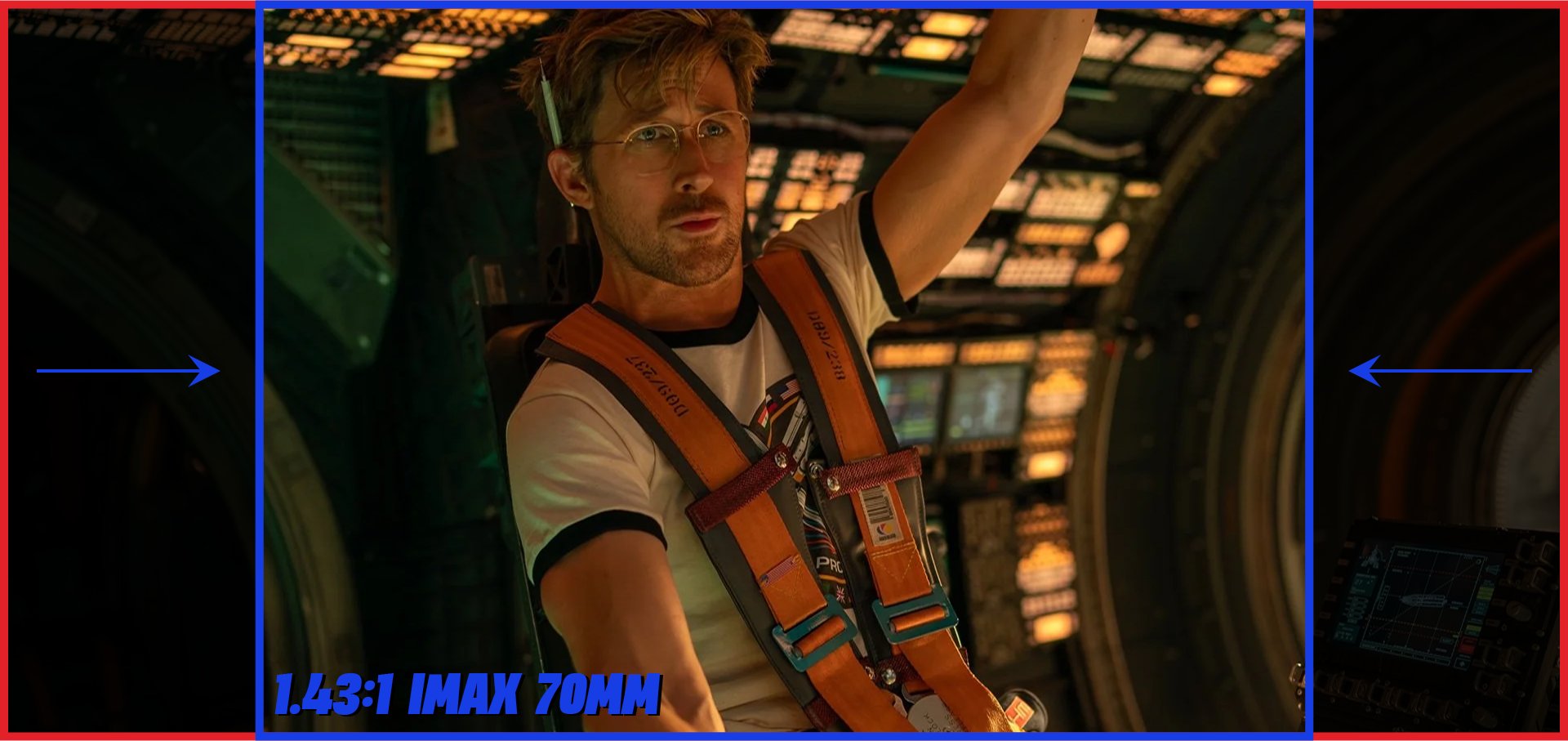
… DP Greig Fraser partnered with Arri to develop vertical anamorphic lenses, which capture a stretched image, which is then de-squeezed to the IMAX 1.43:1 aspect ratio:
Practical Effects
Crucially, the alien Rocky (performed by puppeteer James Ortiz) is more of a practical effect (a puppet) than a visual effect (CGI):
Ryan Gosling on the set of Project Hail Mary pic.twitter.com/E7jAfpEB2J
— cinemabang.com (@CinemabangCom) March 24, 2026
It makes all the difference for how both Gosling and the audience relates to him. The connection is tactile, the chemistry more nostalgic – and this is important in selling the film’s optimism (via Collider):
Co-director Christopher Miller clarifies the ‘no green screen’ vs ‘no VFX’ claims:
As he did on Dune parts One and Two, cinematographer Greig Fraser employed in-camera techniques to achieve some of Project Hail Mary’s stunning visuals:
The Setup:

The Shot:
The setup vs. the shot. #ProjectHailMary pic.twitter.com/lVLOSNykMp
— Project Hail Mary Updates (@HailMaryLogs) March 28, 2026
“Here’s a video I took while we were shooting,” explains co-director Christopher Miller. “You can see on the upper right Tomas pouring water into a tube that runs between 2 panes of glass in front of the handheld camera Greig operates, giving a smeary, drippy look. Ryan stands in a cage of blinking IR lights which are invisible to the naked eye, but in the monitor it’s beautiful. We used this method for closeups. Medium-wides we did on the spaceship set with fewer lights & a lot of digital augmentation/replacement from ILM, and wides were fully digital from ILM, to match this look.”
Here’s a video I took while we were shooting. You can see on the upper right Tomas pouring water into a tube that runs between 2 panes of glass in front of the handheld camera Greig operates, giving a smeary, drippy look. Ryan stands in a cage of blinking IR lights which are… https://t.co/9B1w540Zfa pic.twitter.com/hVfYEJzsMY
— Christopher Miller (@chrizmillr) March 30, 2026
Previs
Director of Photography Greig Fraser, who talked about this back on the Dune films, used Unreal Engine to help pre-visualize the film:
Aurélien Prédal’s concept art for the ‘Time Go Fishing’ sequence:


Artwork
“[Author Andy] Weir spent years getting the science right. The filmmakers felt the same way about the sky. When they needed something beautiful enough to close the film, they went looking for something that actually exists. They found it. 5,000 light-years out”:

Editing
Editor Joel Negron, ACE, describes how the original six hour long editor’s cut was eventually trimmed down to two and a half hours for release by cutting out “a lot of good stuff”:
‘Sign of the Times’
About the ending
Repeat Business
After cultivating a conversation on social media by sharing myriad behind-the-scenes details, and already collecting over $1 billion at the box office, this is genius second bit at the apple – luring audiences back to the cinema to watch Project Hail Mary again, this time with directors’ commentary:
See Project Hail Mary again with the Directors’ Experience. Commentary from directors Phil Lord and Christopher Miller available now in the TheaterEars app. Available only in Theaters. pic.twitter.com/p6PaYFIruI
— Project Hail Mary (@projecthailmary) April 3, 2026
Try It Yourself
We love our lens effects – especially from cheap, unexpected sources…
We look at more techniques you can try:
Further Viewing
In their fan edit, LilyBee.psd printed out and hand painted each frame:
LEGO shared an animated recreation of Grace and Rocky’s first encounter:
LEGO has shared an animated recreation of Grace & Rocky's first encounter in ‘PROJECT HAIL MARY’.
— DiscussingFilm (@DiscussingFilm) March 25, 2026
(🎥: legomereal) pic.twitter.com/Hh4SWX8jRC
In Beyond The Screenplay‘s discussion comparing the book to its film adaptation, Tricia Aurand suggests how flashback scenes could be reordered to improve the film’s control of information and, in turn, enhance the emotional arc for the audience (from 34:00):
Project Hail Mary utilises two different aspect ratios, when alternating between storylines in the present and in flashback. More on aspect ratios, and how they can be used for storytelling:
In a fix-it-in-post / here-comes-AI age, we’re loving that Project Hail Mary is part of a wave of movies featuring in-camera and lens effects: