
A collection of technical tips & tricks.
Interview 101
Indy Mogul regularly taps industry professionals for their demonstration videos, and in the process create helpful checklists. While I’m not sold on all the aesthetic choices in this particular demo, the key takeaways are pretty universal:
- camera – position your subject to look authoritative, rather than dramatic
- lighting – to brighten and separate subject from background
- audio – mic placement, and aiming toward chest rather than mouth
- set prep – “it’s much harder to fix bad audio in post”: take time to dampen the environment during production
- interview – allow silent pauses between Qs and As, and get your subject to repeat each Q before A’ing.
What about showing your interviewer on screen? Cinecom.net offers five quick tips – before equipment, lighting or set-dressing are even discussed – about fundamentals such as camera placement, eyeline, and audio capture:
Lighting
A couple of videos from Aputure, who have a whole series on lighting setups for interviews. This first video demonstrates how to create different looks, styles, genres and moods for your interview – with a single light source:
This second video goes into four distinct lighting plans, with techniques and considerations when going for a more “cinematic” look, such as both adding and subtracting light:
While you may not have access to a bunch of pro-level lights and accessories, this third video is still helpful in its step-by-step, light-by-light breakdown (or, really, buildup) of each look – at the very least, it can give you an idea of what to look for in the lighting of your own setup:
Documentary cinematographer In Depth Cine explores working with multiple lights, and consideres the placement of the subject to make the most of available light:
Commercial Looks
DP Valentina Vee offers a bunch of small but game-changing pro tips in her thread on lighting TV studio interviews:
Variety‘s Actors on Actors series occasionally cuts to a wide shot which allows us to see their entire interview studio setup:

Full-Time Filmmaker takes a more detailed look at the technical considerations (with, of course, more gear) of producing a high-end video interview:
Documentarian Mark Bone walks through the technical setup of this high-end interview shoot, focusing on lighting and the importance of location…
… and includes beginner, intermediate, and advanced lighting plans for his interview case study (tap to enlarge):
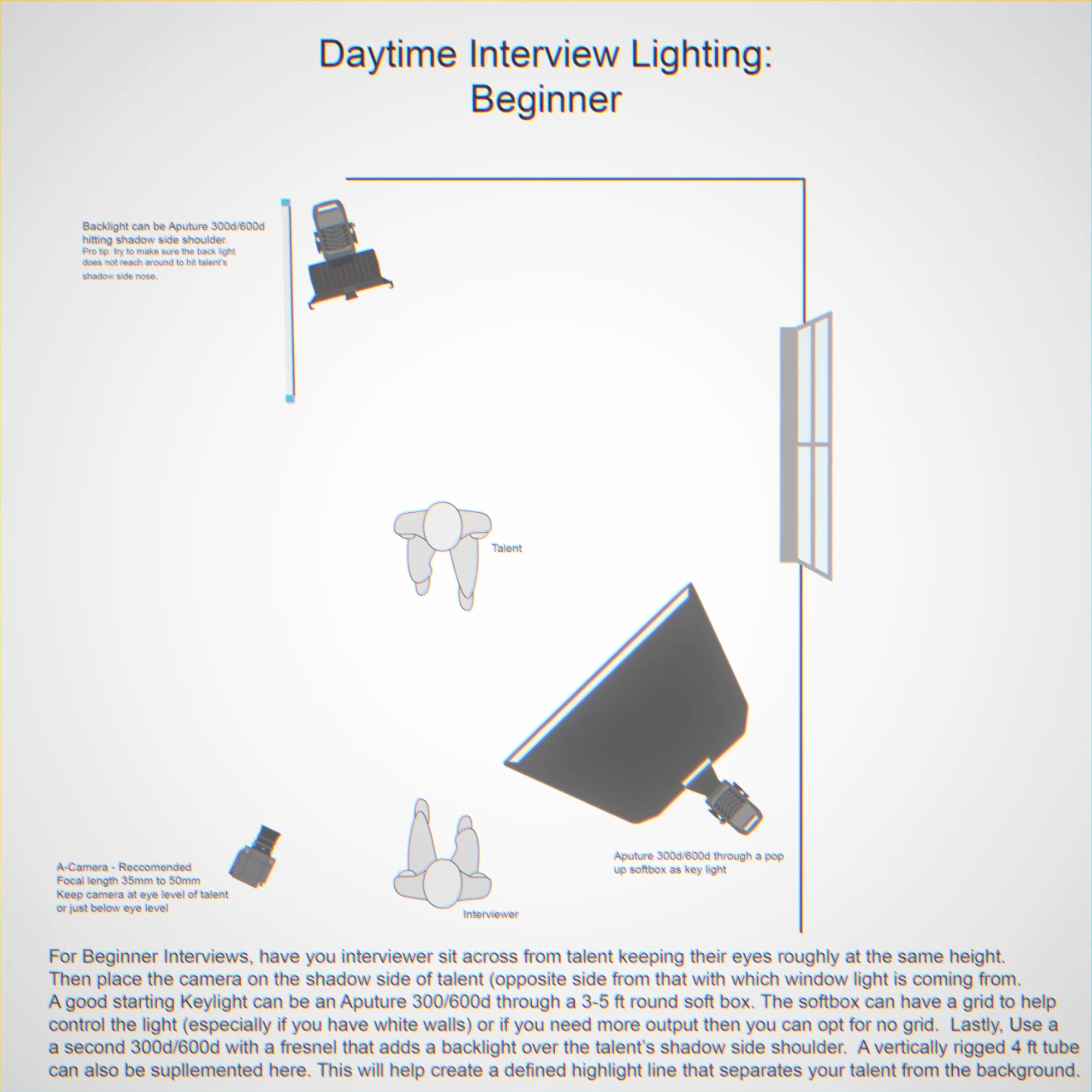
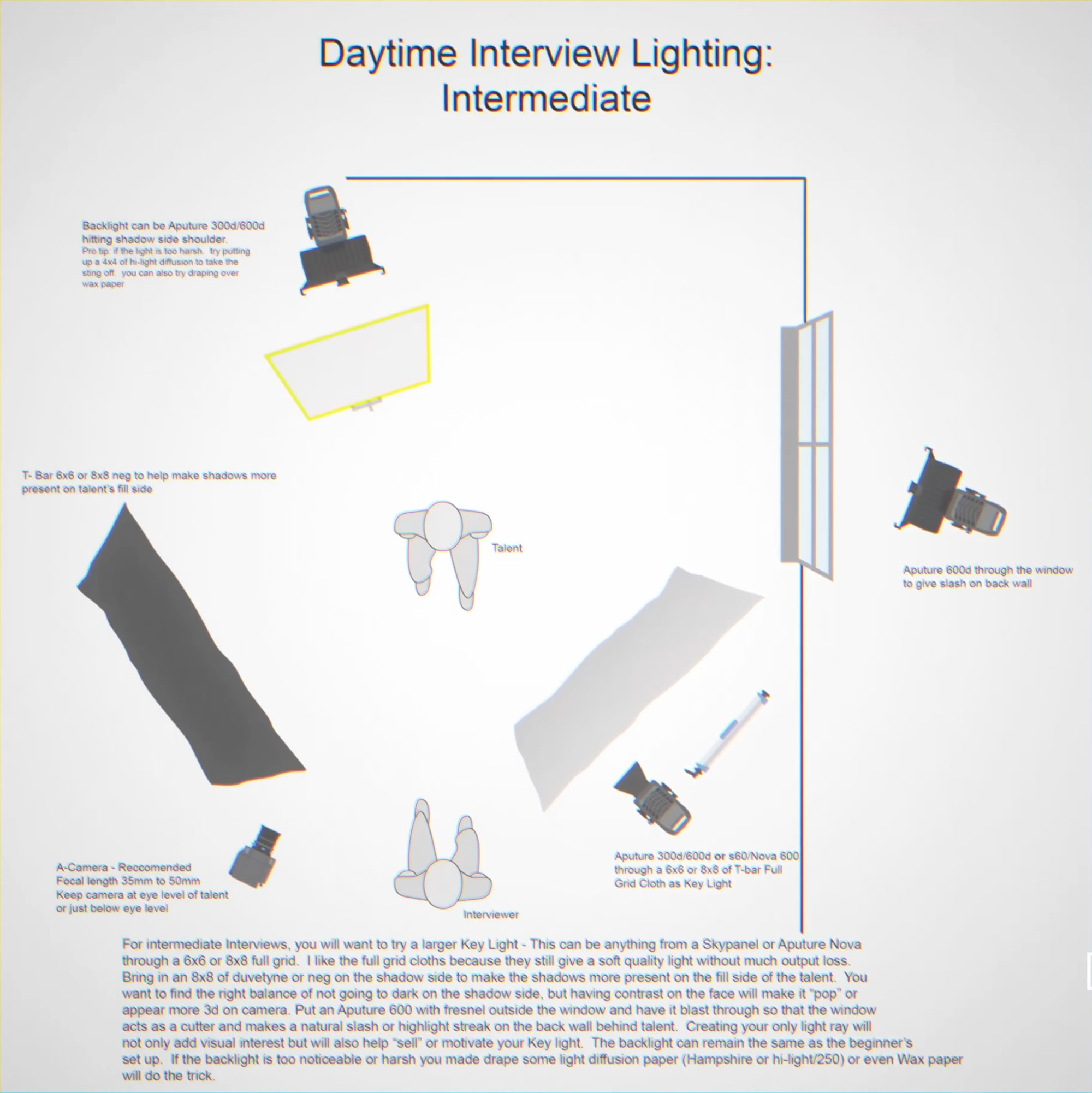
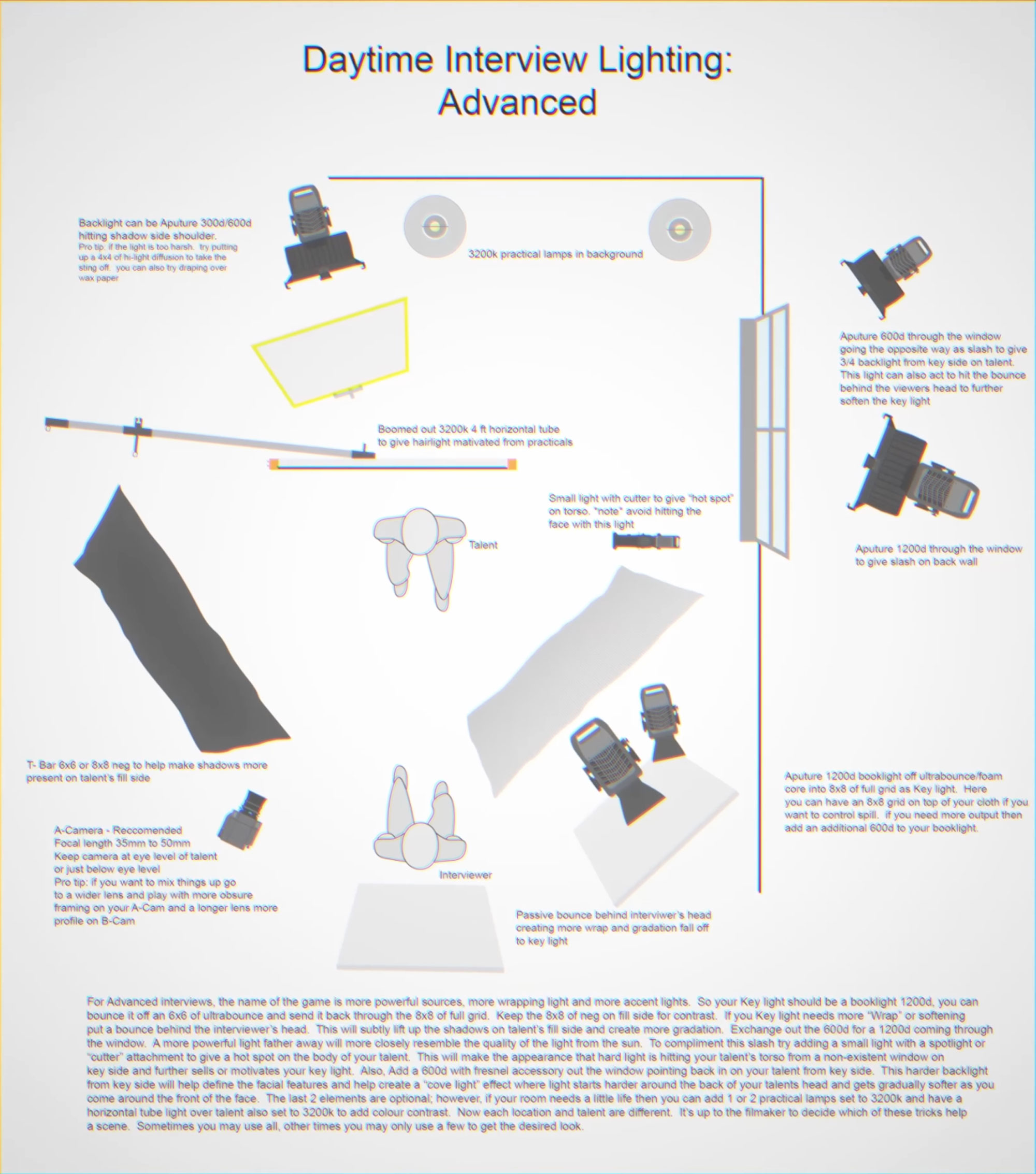
Mark also interviews Stefano Ferrari about his distinctive cinematography style in documentaries such as American Nightmare, Don’t F*ck With Cats, Hell Camp: Teen Nightmare, and Surviving Black Hawk Down:
Editing
Standard Story Company offers an intro to professional multi-camera interview editing, from start to finish in 30 minutes, in Adobe Premiere Pro:
Further Viewing
A personal favourite: short documentary Too Old To Be New, Too New To Be Classic: 12 Years of DFA features interviews shot in a style consisting of some fresh takes on some of the conventions in the examples above:
Technical details aside, there are also approaches for how to get the best out of your interview subject: